Alarming Facts
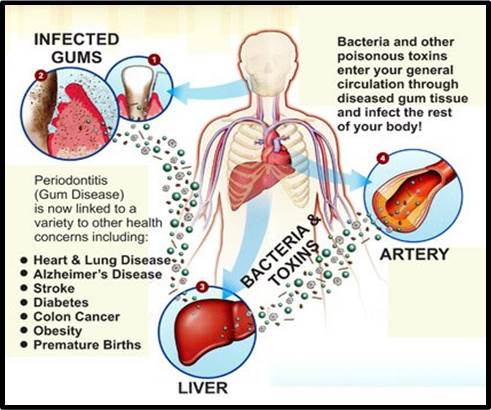
Evidence indicates that a person suffering with periodontal disease may be more at risk for cardiovascular disease and have twice the risk of suffering a fatal heart attack than patients without periodontal disease. Although greater research is required to confirm recent findings, there exists a possibility that periodontal bacteria enters the blood through inflamed gums and causes small blood clots that contribute to clogged arteries. Other indications are that the inflammation caused by periodontal disease contributes to the build-up of fatty deposits inside heart arteries.
New evidence points to periodontal disease as a risk to pregnant woman. Pregnant women who have periodontal disease may be up to seven times more likely to have a baby born too early or too small. More research is definitely needed but it is clear that periodontal disease is an infection and all infections are cause for concern among pregnant women.
There is a possibility that patients with periodontal disease could be at risk for respiratory disease. Smokers and the elderly with health problems are at increased risk for diseases like pneumonia, bronchitis, emphysema and chronic obstructive pulmonary disease.
RISK FACTORS INCLUDE:
- Inheritance factors: most individuals are very susceptible to the local irritants that cause gum disease. According to British Government statistics, three out of four adults in the population are affected by periodontal disease spanning all ethnic and social levels. Periodontal disease is believed to be the major cause of over 70% of adult tooth loss.
- Having systemic diseases including diabetes, high blood pressure and HIV increase the odds of gum disease due to the diminishment of necessary fighting forces to combat the gum irritant.
- The increase in blood supply to certain tissues in the body due to hormonal changes during pregnancy also affects gum disease. Pre-existing gum disease, even in the early stages, can make these symptoms more severe.
- Types of foods, frequency of eating them and smoking have a huge impact on the risk of perio – over 300 natural bacteria species live in our mouths, which are strong factors of plaque. Those who smoke cigarettes maintain a much warmer temperature in the mouth thereby allowing bacteria to thrive. Additionally smoking dries the saliva in the mouth depriving the mouth of a much-needed buffer against bacterial growth. Other habits we engage in e.g. fizzy drinks, smoking, eating biscuits and sweets in addition to eating several meals per day, also contribute to the creation of plaque which contains various types of bacteria.
- Lack of basic oral hygiene and ineffective plaque control is a major contributor to the disease, as many people do not have sufficient brushing and flossing habits.
- Smoking may be responsible for more than half of the cases of periodontal disease among adults, according to a new study published in the Journal of Periodontology. The study found that current smokers are about 4 times more likely than people who have never smoked to advance periodontal disease. However, 11 years after quitting, former smokers’ likelihood of having periodontal disease was not significantly different from non-smokers.